This is How Social Orders Die. We Can Be Midwives.
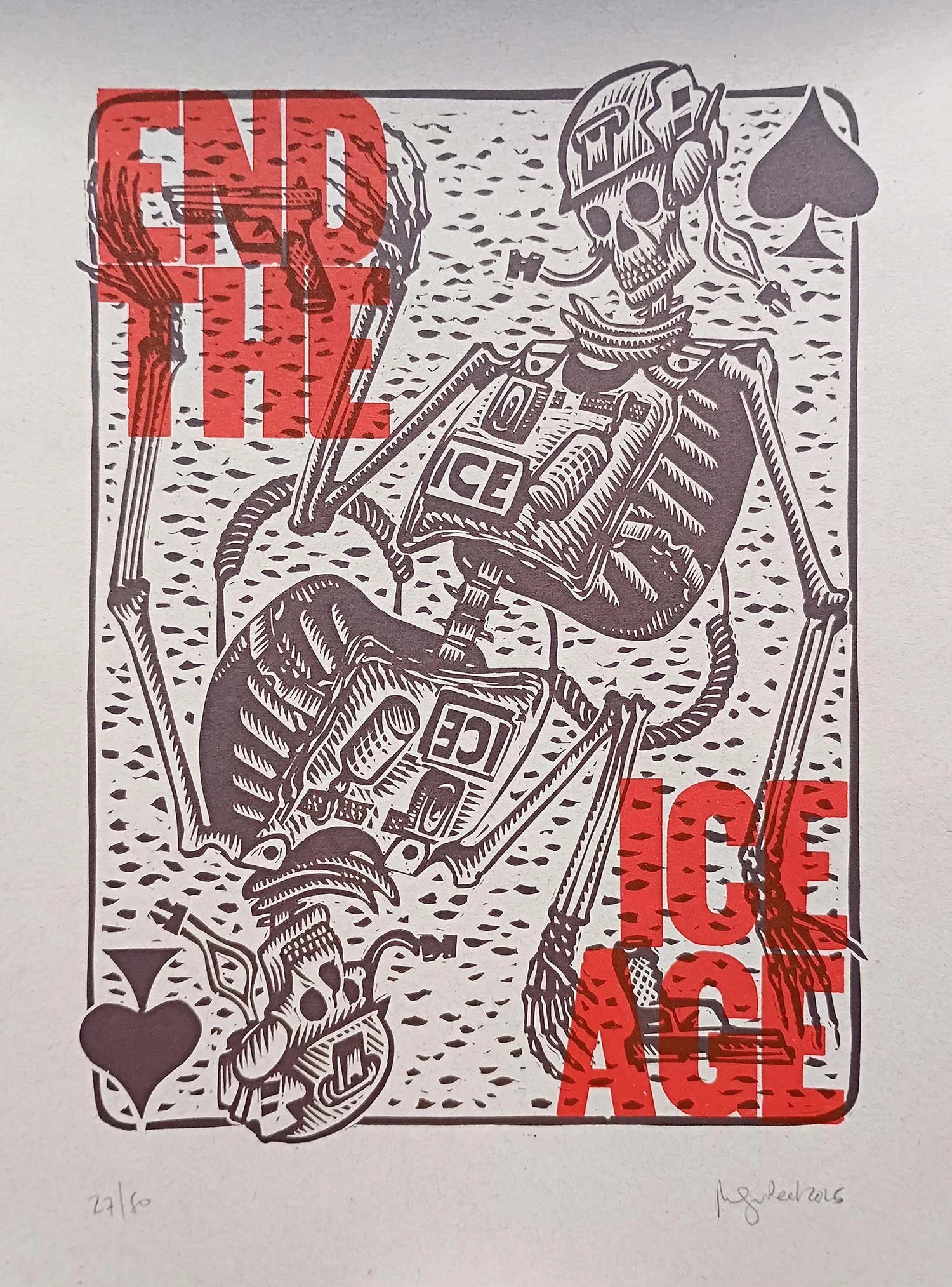
Image from just seeds
Matt birkhold
The first six weeks of 2026 has been a painful year. Renee Good was murdered by ICE agents in Minneapolis on camera, January 7. The federal government blamed her for her own murder and prevented local authorities from investigating. A male ICE agent stole a flower from her memorial and mockingly gave it to a female officer.
A general strike was organized in the Twin Cities. Tens of thousands of people showed up on January 23 in subzero temperatures. The next day, ICE murdered Alex Pretti. The federal government once again blocked local investigators and blamed the victim for his own murder. The Atlantic called it fascism. Protests erupted locally and globally. In response, the supervisor of operation Metro Surge was switched. This switch was damage control. On the ground, things have remained the same. ICE continues to arrest legal observers.
This is a painful, sad, period to live through and I haven’t even mentioned international developments or climate.
As is often the case, this pain is a sign of something bigger. On a personal level, the pain might be a symptom of great disappointment, fear, grief, or anger. Visionary Organizing Lab has developed a tool that can help you name what your personal pain might be a sign of.
On a structural level, this pain is a symptom of a dying social order. States that are strong don’t have to resort to force. They govern through consent. When states that typically govern by consent resort to outright domination or force to maintain a social order, it is always a sign of weakness.
The US Social Order is weak and resorting to the force represented by ICE because it’s in a state of dying.
The social order that's dying is the one that was born in Lagos, Portugal in 1444. From that fateful day when the first enslaved Africans entered Europe, our lives have been shaped by a social order based on the divine white rule and the oppression of women, nonwhite peoples, poor people, and nature.
This social order has been resisted constantly. In the 19th and early 20th centuries, workers organized themselves into labor movements that forced the social order to become more humane. Then, after WWII, colonized peoples around the world organized themselves into anticolonial movements that forced the social order to become more humane. Then, in the 1960s and 70s, workers in Europe, racially oppressed people in the US, and women around the world organized themselves into movements that forever altered the system and made it more socially and culturally humane. In the 1980s, Ronald Reagn and Margaret Thatcher attempted to reassert the order on legal grounds but culturally it was already too late. The cat was out of the bag. It wasn’t going back in. The culture had changed.
Since the Reagan era, the culture has continued to become more tolerant. When I was in high school in the 90s, I couldn’t imagine my classmates being openly LGBTQ. It simply wouldn't have been safe. Today, the recognition of preferred pronouns are a routine aspect of many organizational cultures. When I became an antiracist organizer in the early 2000s, the idea that something like white fragility would be written about in the New York Times was a pipe dream. Today How to be an Antiracist is a bestseller.
Alongside this cultural progress, the backwards legal measures taken by Reagan and Thatcher have become even more deeply rooted. As a result, we're faced with a contradiction between our cultural reality and our legal/political reality.
This contradiction is the structural root of our pain. A new world is struggling to be born. An old world is dying. I am told that giving birth is painful. I’m also told that midwives are helpful. If we commit ourselves to hospicing the dying order and creating experiments to meet our needs in ways that resemble a new culture, we can become midwives for a new world and social order.